Raku glazeCrackleBeginner
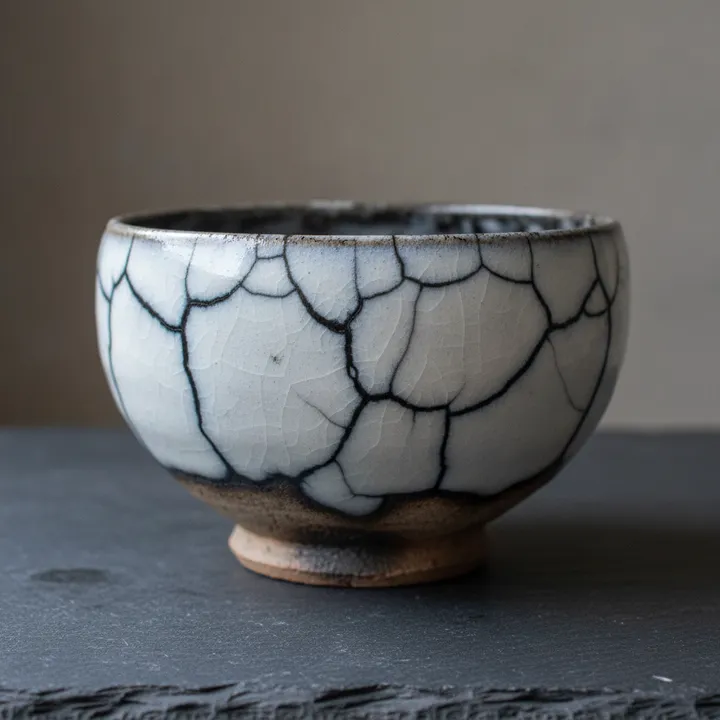
White crackle
Raku, about 950–1000 °C (1740–1830 °F)
The raku classic: milky white with a bold black crackle that also covers dark clays.
Raku glazeCrackleBeginner
Raku, about 950–1000 °C (1740–1830 °F)
The raku classic: milky white with a bold black crackle that also covers dark clays.
Raku is decorative. The body stays porous and the glazes are unstable on purpose. Never use a raku piece for food or drink. Fire outdoors, with heat gloves and a face shield.
A two-ingredient clear raku glaze that crazes and takes smoke in the cracks.
A copper raku glaze that goes metallic luster or turquoise depending on the reduction.
A black raku glaze with metallic, iridescent flashes under heavy reduction.
A thin, mostly-copper raku surface that flashes red, purple and blue.
The resist slip for naked raku: it peels off and leaves smoke lines on bare clay.
The crazing glaze that goes over the resist slip in naked raku.
A buffed red clay finish that takes smoke softly, with no glaze.
A colemanite-and-frit blend calculated to stand in for Gerstley borate in raku glazes.