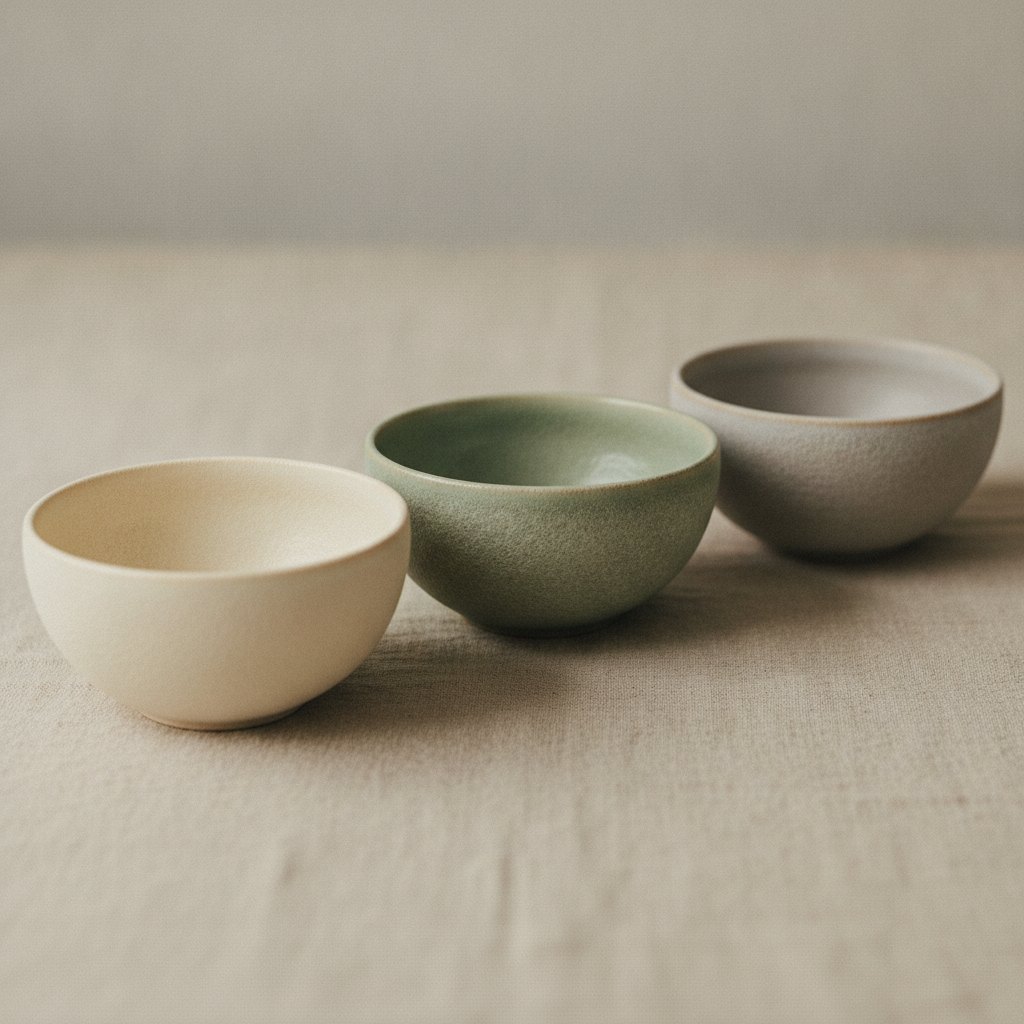
Matte glaze has become a signature of contemporary ceramics: a velvety, glass-free surface that flatters the form of the pot and the texture of the clay. But there's a trap that separates the experienced potter from the beginner — a glaze can look matte for two opposite reasons, and only one of them belongs on a pot you use.
1. Real matte vs fake matte (underfired)
A glaze can end up without gloss in two ways:
- Real matte — the glaze fully melted, matured, and the surface is microcrystalline: tiny crystals that form on cooling scatter the light instead of reflecting it like a mirror. It's stable, durable and smooth to the touch.
- Fake matte (underfired) — the glaze never melted properly. It looks matte because it's rough, porous and dry, not because it crystallized. This "matte" stains easily, traps grime, leaches metals and is fragile. It looks great on the test tile and becomes a problem on the dinner table.
Simple test: drag a fingernail across it. Real matte is smooth and velvety; an underfired matte scratches, marks and feels like chalk.
2. The two routes to a real matte at cone 6
To make a glaze matte without underfiring, you manipulate the chemistry — you do not drop the temperature:
- Alumina matte (a "stiff" melt) — excess Al₂O₃ relative to silica makes the melt very viscous, and it solidifies microcrystalline. It works, but overdo it and you get a dry, harsh surface.
- Crystalline matte (calcium / magnesium) — plenty of CaO (calcium matte) or MgO (magnesium matte, the classic "buttery" dolomite matte) forces crystals to form on cooling. A slow cool deepens the effect.
Barium (BaO) mattes are beautiful and traditional, but barium is a heavy metal restricted in food contact — the technical literature recommends substituting strontium carbonate when the ware is functional.
3. The UMF target
Compared with a glossy glaze, the matte shifts the Seger formula toward less silica and/or more alumina and crystallizing fluxes:
| Oxide role | Glossy cone 6 | Matte cone 6 |
|---|---|---|
| SiO₂ | ~3.0–3.5 | ~2.2–2.8 |
| Al₂O₃ | ~0.35–0.45 | ~0.30–0.50 |
| SiO₂:Al₂O₃ ratio | ~7–10 | ~5–7 |
The matte lives in the lower-silica band of the Stull chart — close enough to the melt that the surface stays smooth, far enough that crystals form.
4. A base recipe to test
A magnesium-matte starting point for cone 6 oxidation (percentages sum to 100; colorants are added on top):
- Nepheline syenite — 40
- Talc — 18
- Whiting — 6
- EPK (kaolin) — 14
- Silica — 22
Add 2–4% of a stain or oxide on top for color. This is a starting point only — bisque-fire a triaxial test before you ever put it on production ware.
5. Food safety
A matte that's matte because it underfired is not food safe. Even a properly melted matte can leach metals if it's heavily colored. When in doubt with functional ware, run a leach test (ASTM C738) and avoid barium and high copper on food surfaces.
Ready to skip the spreadsheet? Generate an original glaze recipe from a photo — kilnmuse reads the finish, writes a fireable recipe, and tells you honestly when an effect can't be done at your cone.
Ready to put this into practice?
Generate an original glaze recipe from a photo. Automatic chemistry validation plus variants to bench-test.
Generate a recipe free →