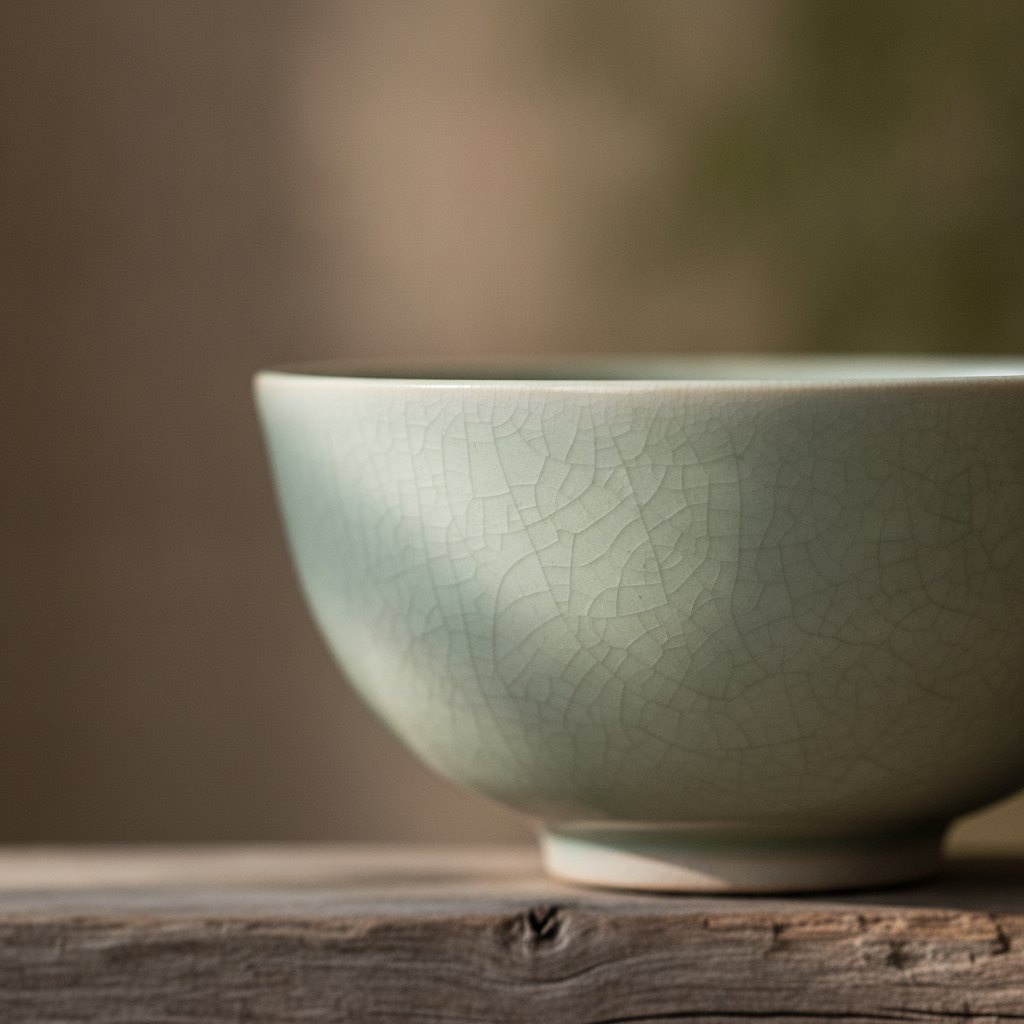
Crazing is the fine web of cracks you sometimes find across a glaze — sometimes minutes out of the kiln, sometimes weeks later when a "ping" announces a new line. It's tempting to blame the firing. It almost never is. Crazing is a fit problem: the glaze and the clay body don't shrink together on cooling.
What's actually happening
Everything shrinks as it cools. If the glaze shrinks more than the body (higher thermal expansion), the glaze gets stretched across a body that won't give — it's put under tension, and a brittle glass under tension cracks. That's crazing.
The opposite fault is shivering: the glaze shrinks *less* than the body, ends up in compression, and flakes off sharp slivers at the edges. Shivering is the more dangerous of the two on functional ware. Crazing is mostly a durability and food-safety issue.
Why crazing matters
- Strength — a crazed glaze weakens the pot; cracks are stress risers.
- Food safety — the craze lines harbor bacteria and let liquids reach the body. A crazed glaze is not considered food safe on functional ware.
- Delayed crazing — a glaze that fits "well enough" can craze weeks later as the body slowly takes on moisture and expands. A fit that's only marginal will fail in service.
How to fix it: lower the glaze expansion
Crazing means the glaze expands too much. The levers, in rough order of effect:
- Less high-expansion flux — sodium (Na₂O) and potassium (K₂O) are the biggest culprits. Cutting feldspar or a high-soda frit helps a lot.
- More silica (SiO₂) — silica has low expansion and improves durability. Adding 5–10% silica is the classic first move.
- More boron or magnesium — B₂O₃ and MgO are low-expansion fluxes; swapping some sodium for them lowers expansion without underfiring.
- More alumina — a small alumina bump (more clay) also helps and stiffens the melt.
A practical first try: add silica in 5% steps, refire a test tile each time, until the crazing stops. If you run out of silica room before it stops, start cutting the high-alkali flux.
When crazing is the goal
Crackle (kannyū) glazes craze on purpose — celadon and many traditional crackle wares prize the web. If that's the look you want, you exaggerate the mismatch instead of fixing it, and often rub ink or strong tea into the lines to make them show. Just keep crackle ware off the food-contact list.
Don't guess — calculate the fit
Eyeballing oxide swaps gets slow fast. The expansion of a glaze can be estimated from its Unity Molecular Formula, and the Stull chart shows the crazing region directly.
Want the shortcut? Generate a recipe from a photo and kilnmuse checks the chemistry — including expansion — before you fire.
Ready to put this into practice?
Generate an original glaze recipe from a photo. Automatic chemistry validation plus variants to bench-test.
Generate a recipe free →